Katrín Inga
Photon sensations in linear empty space = vacuum
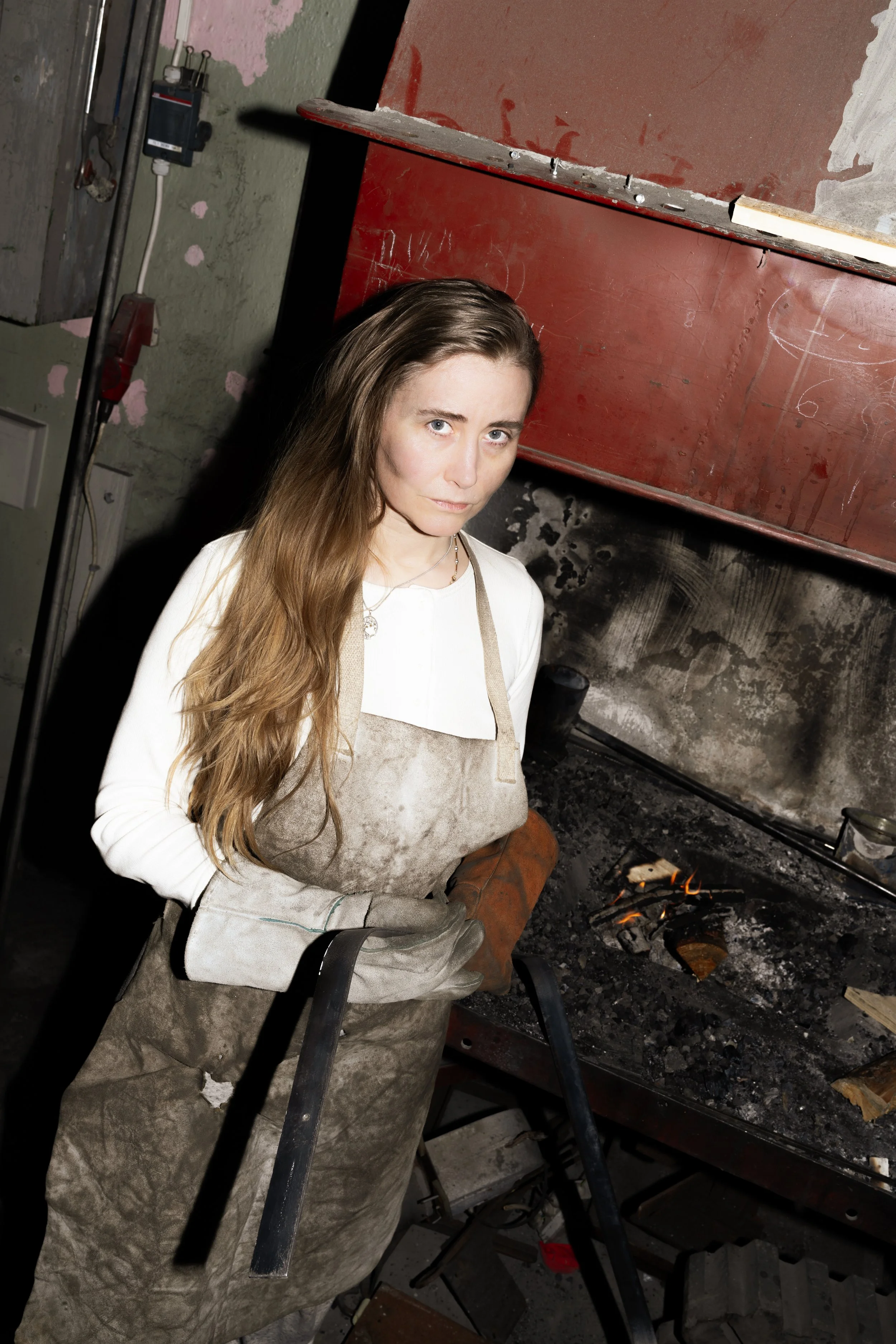
Katrín Inga Jónsdóttir Hjördísardóttir is a visual artist living and working in Reykjavík. She works across mediums, with her practice examining social structures and value systems, drawing attention to systemic phenomena that often take center stage in her visual philosophy. The purpose of art and love plays a significant role in her creative process, which seeks to disrupt cycles of political and cultural conflict.
Light is one of the fundamental phenomena of the universe. It is attractive from all directions, and its meaning is nearly infinite, often associated with hope, consciousness, and positive states. Light always travels and finds its way, whether we perceive it or not. In a similar way, our emotions move; they are not always visible, not always controllable, yet they are real and influential. Highly abstract.
The light in the works of the exhibition is placed in relation to emotions, intuition, and perception. An attempt to make the invisible tangible: the energy, the vibration, the state between us. In quantum physics, light is both a wave and a particle—a duality that challenges conventional understandings of reality. In the same way, emotion is both subjective and material; it shapes behavior, decisions, and the space between us.
The works reflect the idea that everything is interconnected and that our perception is an active participant in what comes into being. Here reference is made to Karen Barad’s concept of Agential Realism, in which the world is not a collection of separate entities but a process of relations and interactions. Reality emerges through the act itself.
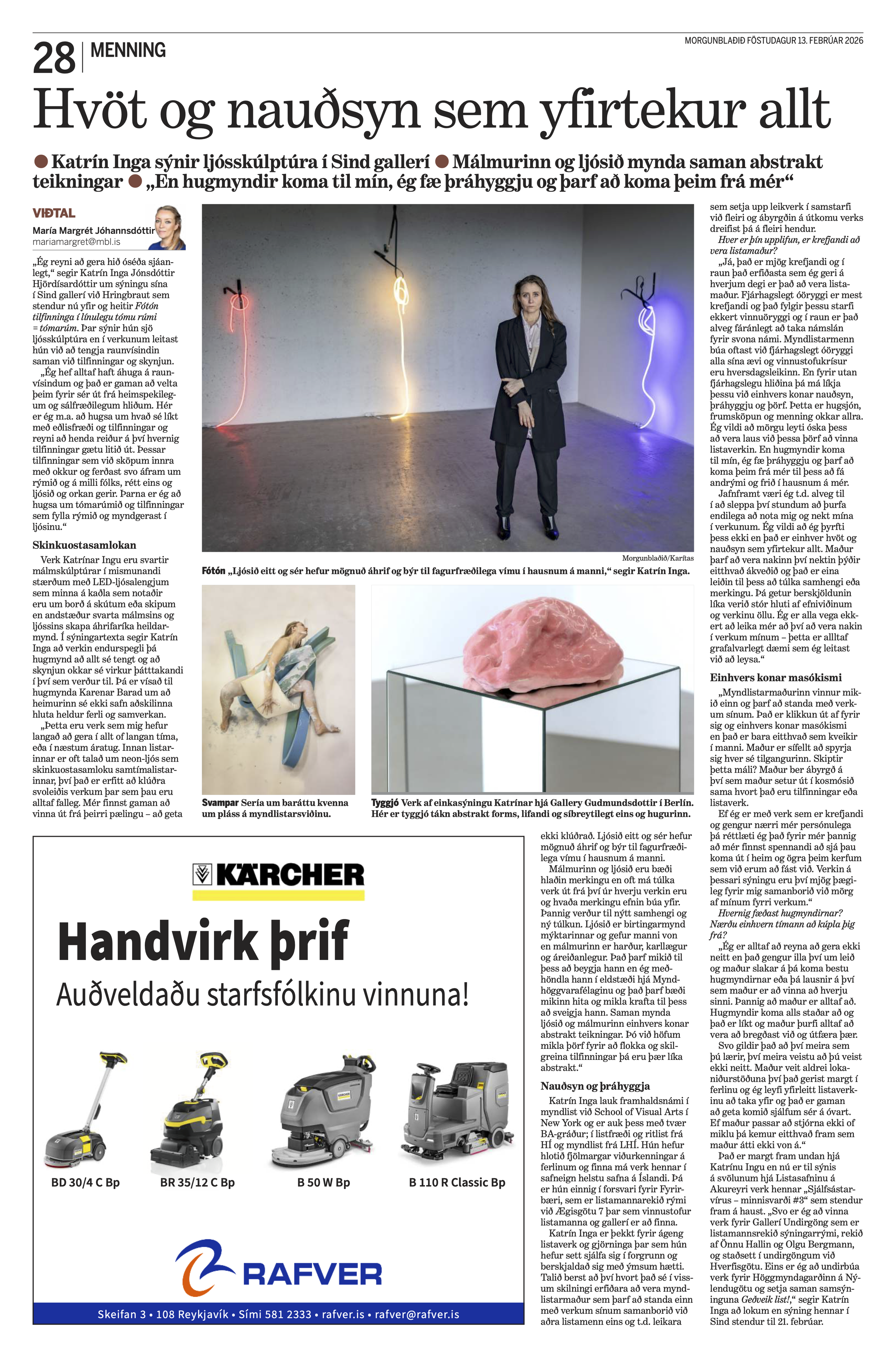
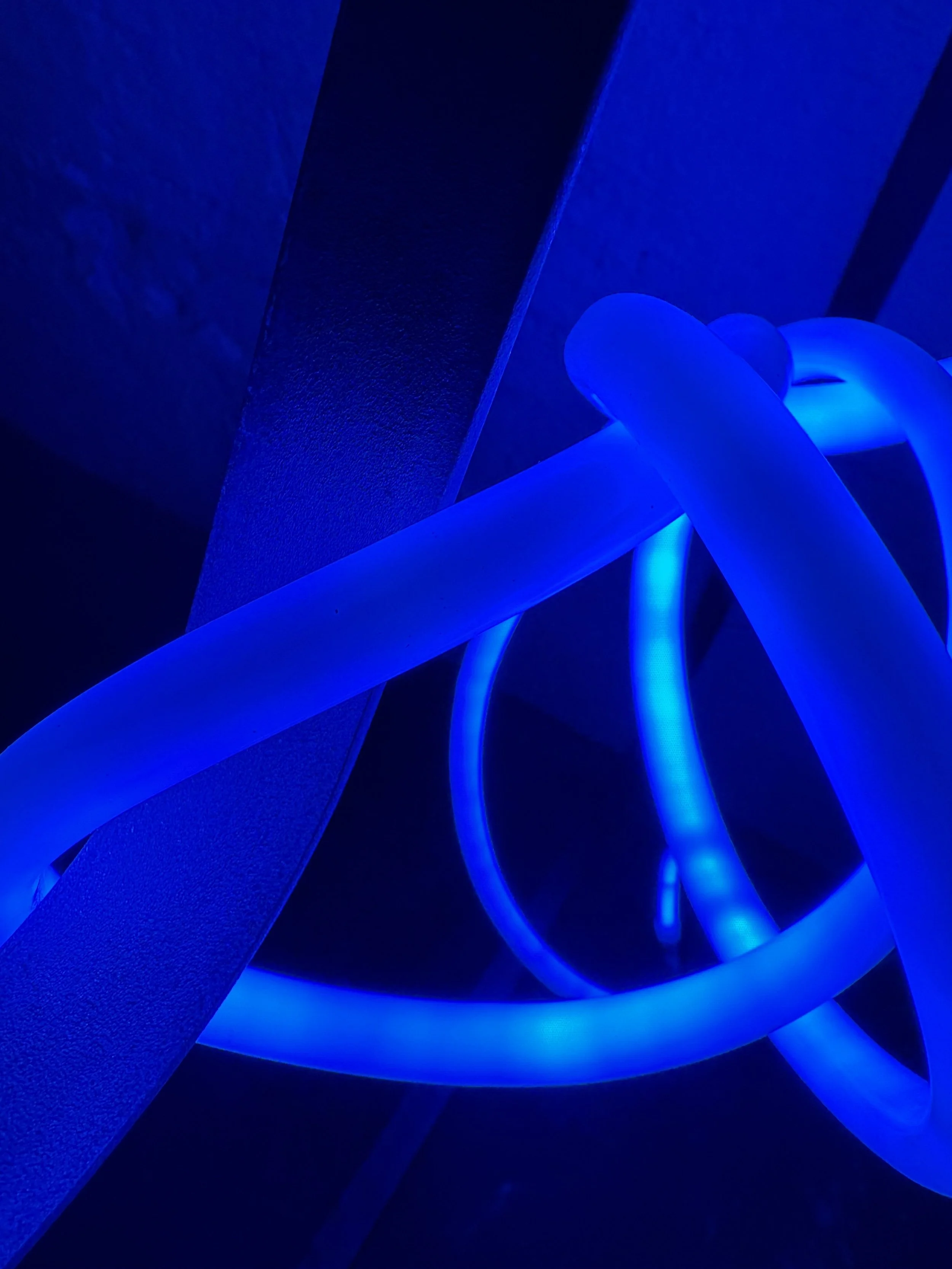
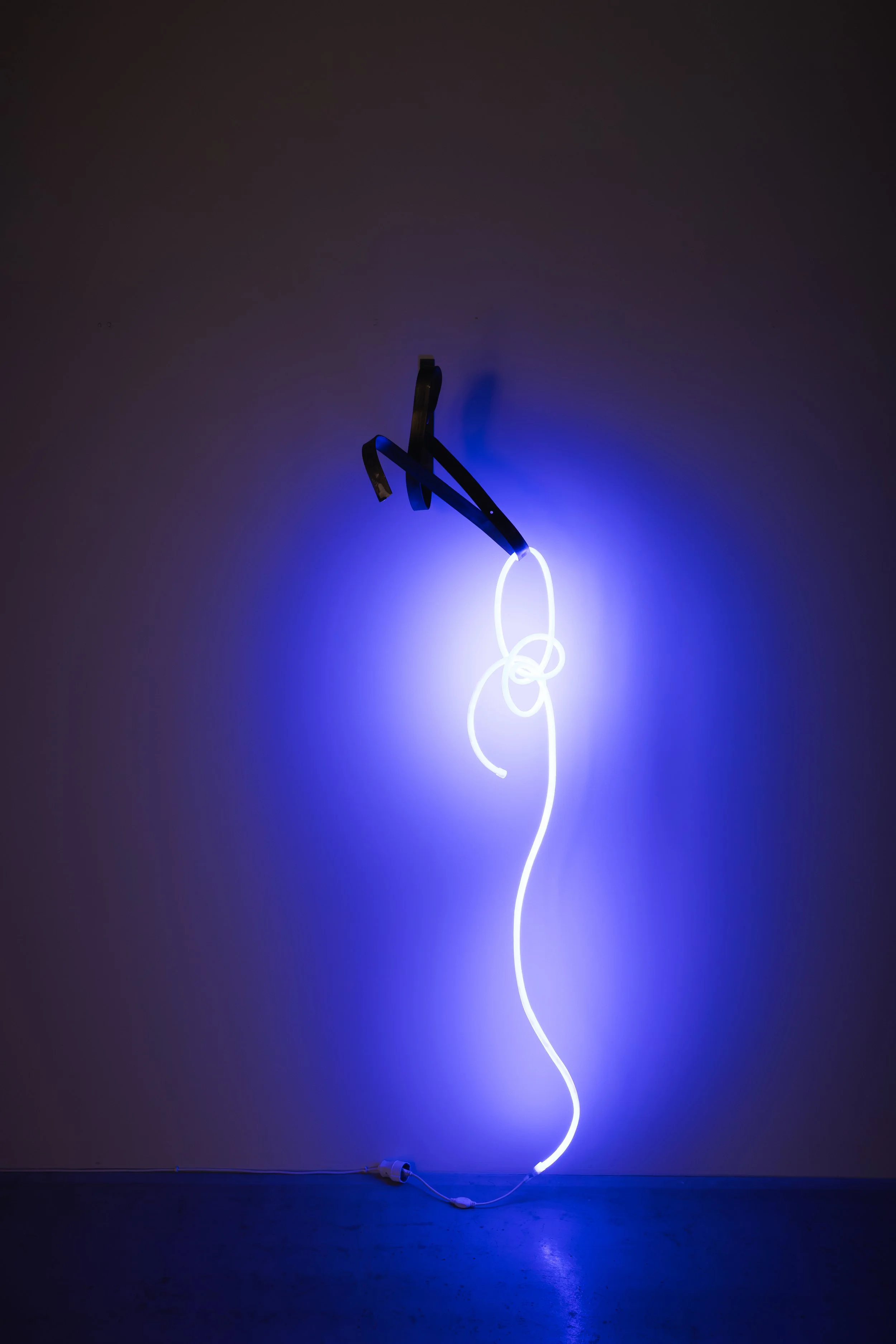
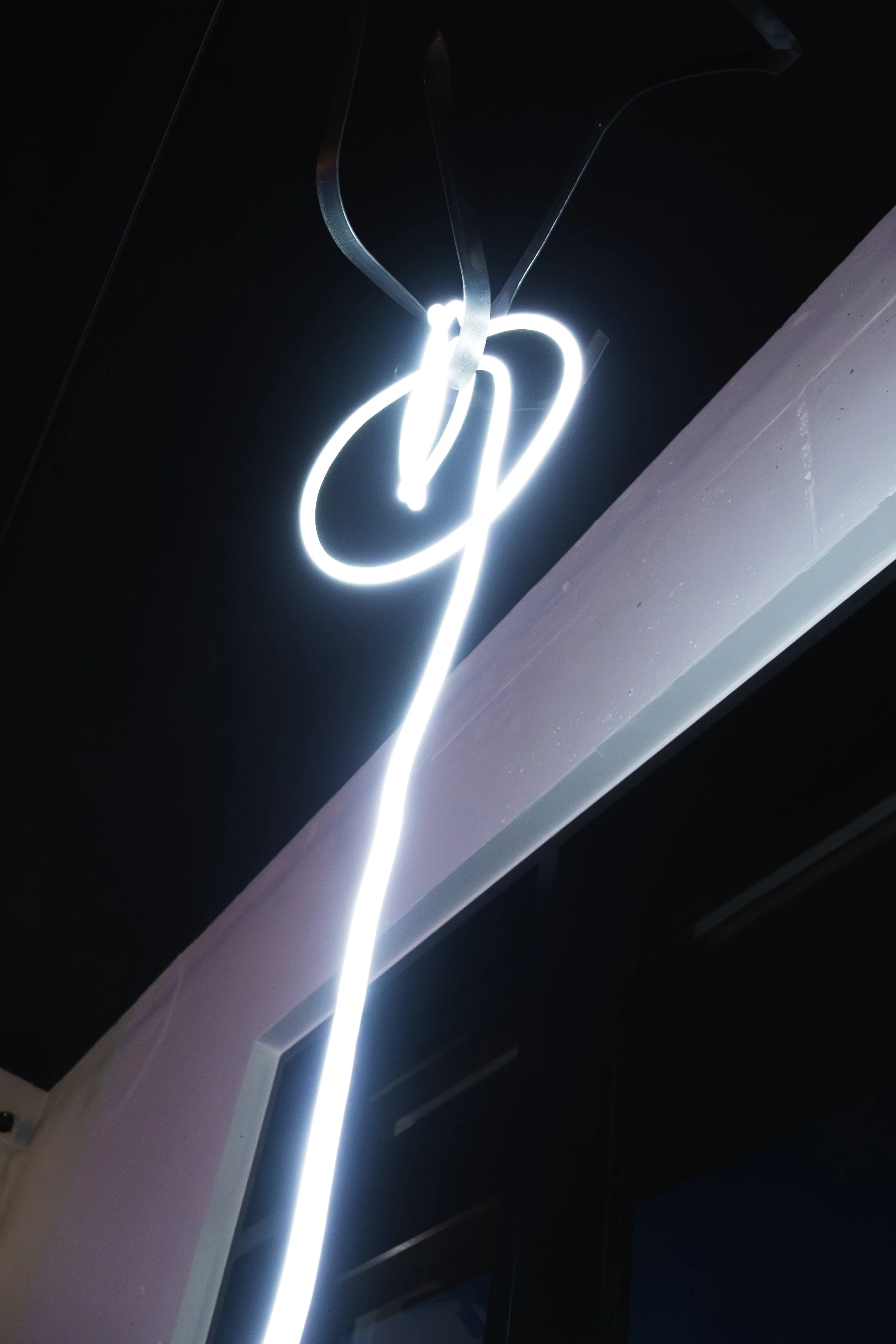
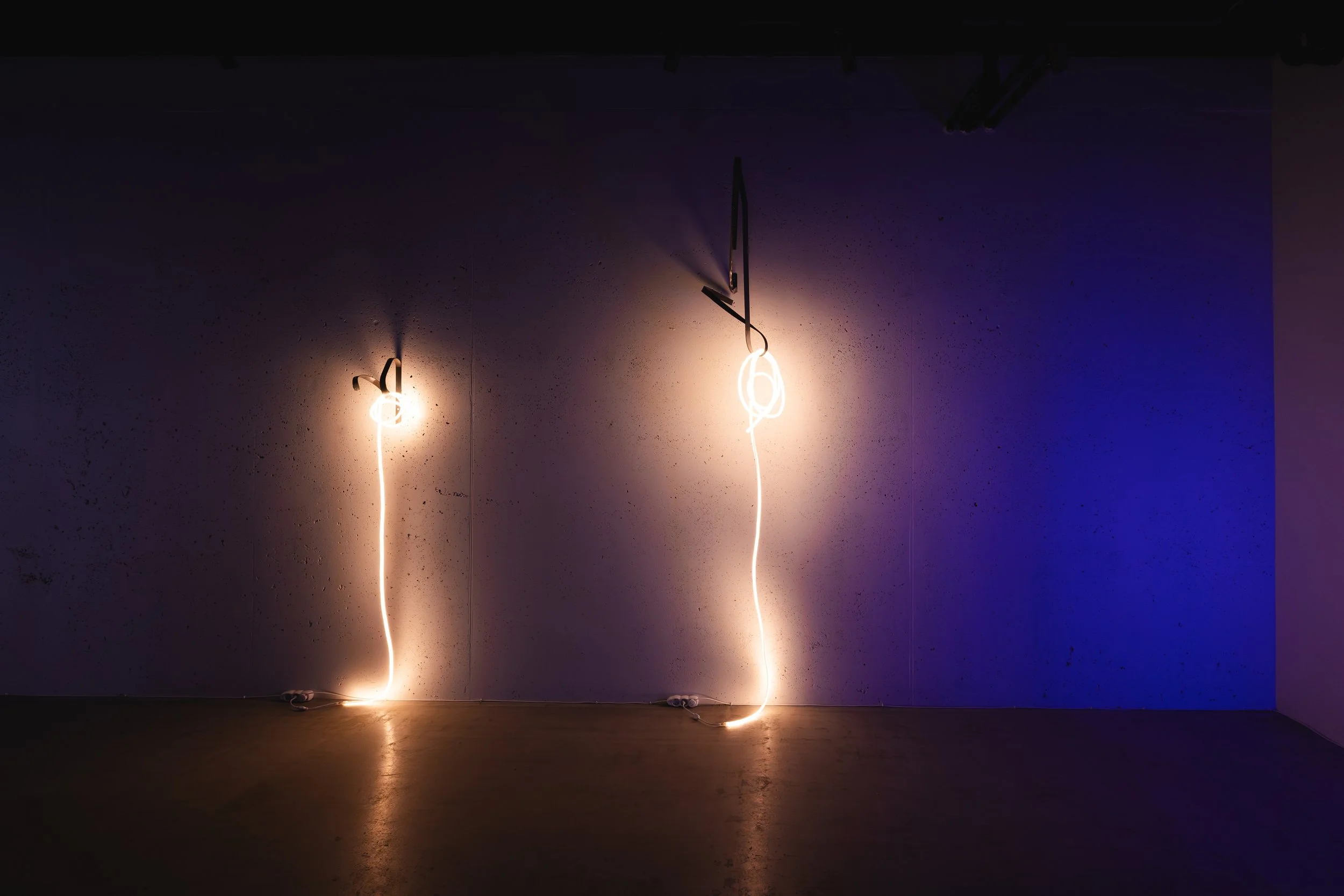
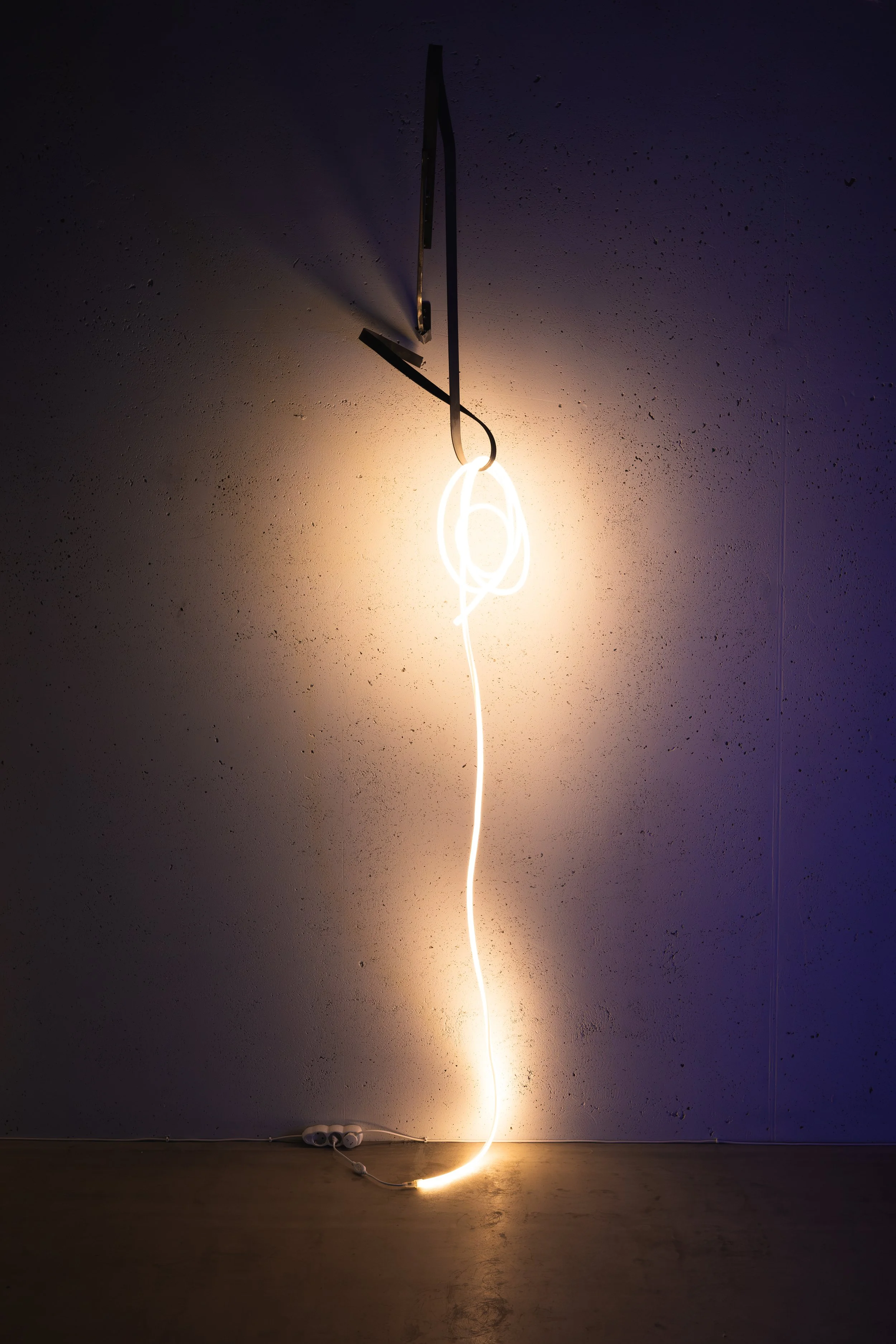
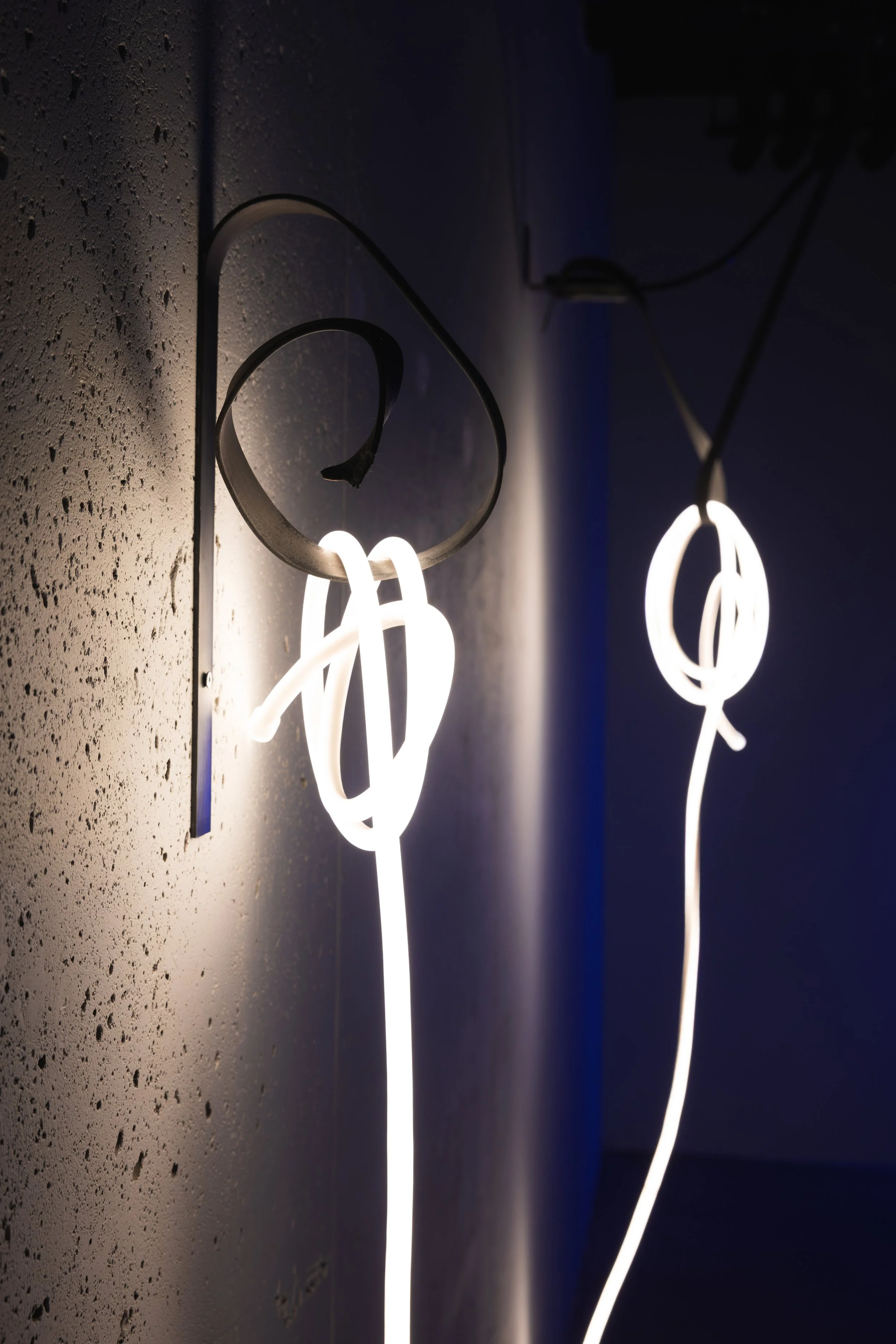
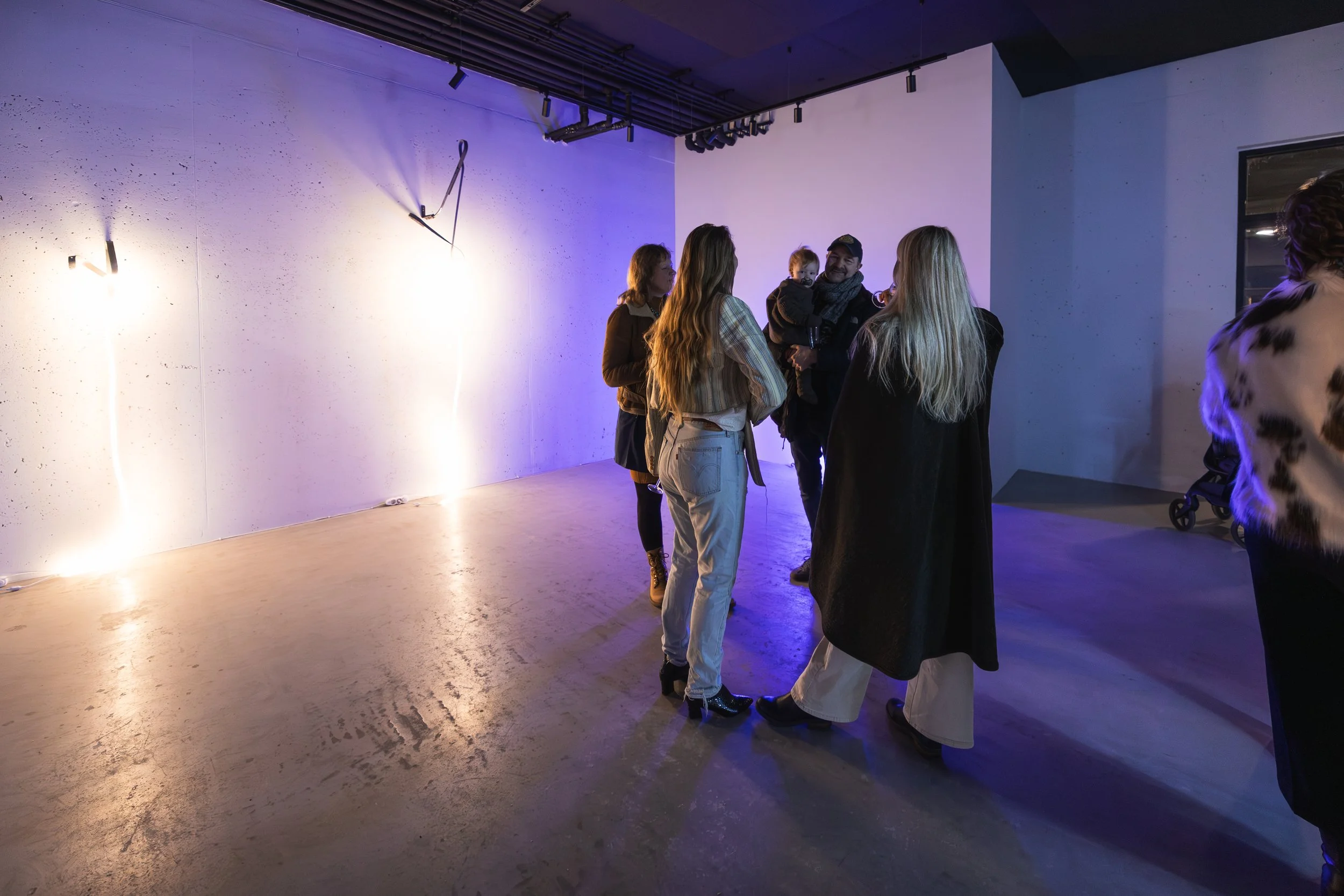
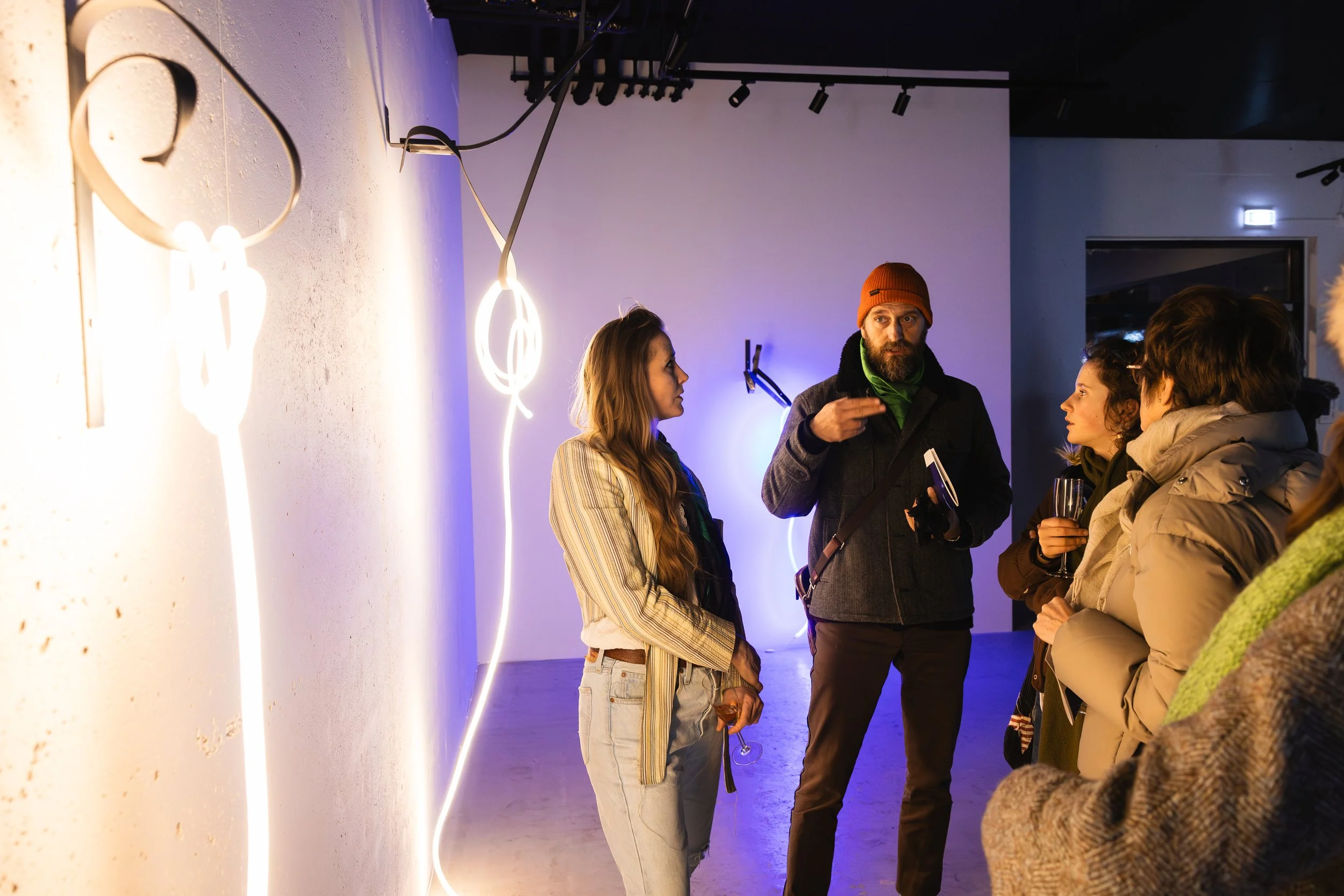
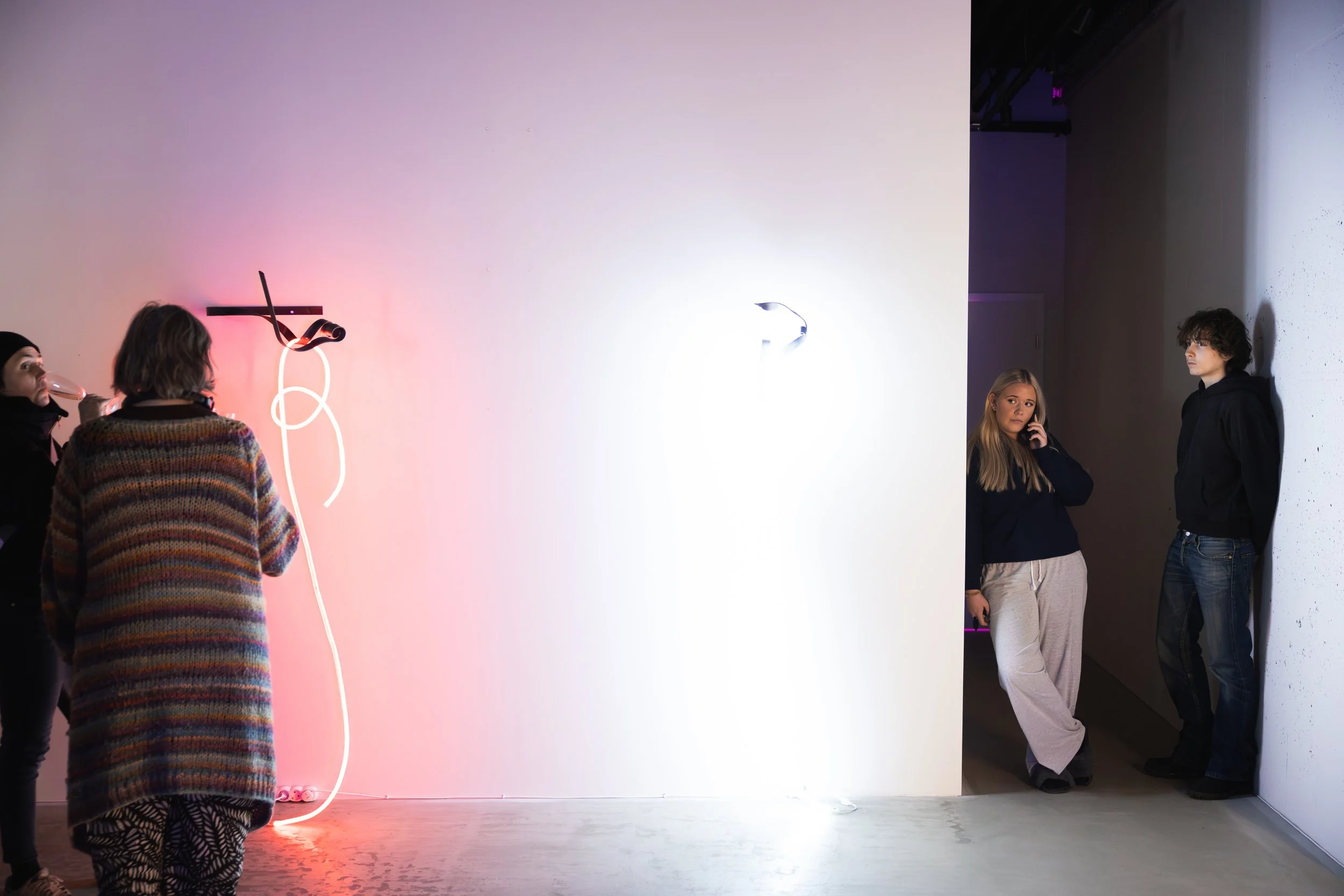
The sculptures are made of metal and 360° neon LED light tubes. They form abstract, linear drawings in space—something between bas-reliefs, wall works, and wall-mounted sculptures—where the light does not merely draw form, but a state within an abstract emotional context.
Gratitude to the light. Gratitude to emotions. Spatial gratitude.
—
Katrín Inga holds an MFA from the School of Visual Arts in New York (2014), a BA in Art Theory and Creative Writing from the University of Iceland (2012), and a BA in Fine Arts from the Iceland University of the Arts (2008).
She has received numerous awards, including a Fulbright Grant (2012–2014), the Guðmunda Andrésdóttir Grant (2013), the Dungal Recognition Award (2012), and the Svavar Guðnason & Ásta Eiríksdóttir Award (2017). She has held numerous solo exhibitions, including at Gallery Gudmundsdottir, Berlin; The Living Art Museum, Reykjavík; Ekkisens, Reykjavík; and Gallery Donnerstag, Berlin. She has participated in over one hundred group exhibitions, including at High Line Art, New York; Kunstmuseum Liechtenstein; the XVII Biennial of Young Artists, Milan; the National Gallery of Iceland; Reykjavík Art Museum; Reykjanes Art Museum; The Living Art Museum; and the gallery Kling & Bang.
Katrín Inga has also taken part in various art festivals, such as the Reykjavík Arts Festival and Raflost, and has created works in public spaces, including commissions for Akureyri Museum, Plan B in Borgarnes and The Wheel, for the Reykjavík Sculpture Association. She has contributed to numerous collaborative projects, including It Is the Media Not You!, the publication of the magazine Endemi, and performance events hosted by Ofar Mannlegum Hvötum. She has also participated in international residencies, including at Cité des Arts in Paris. Her works are held in the collections of the National Gallery of Iceland, Reykjavík Art Museum, and The Living Art Museum.

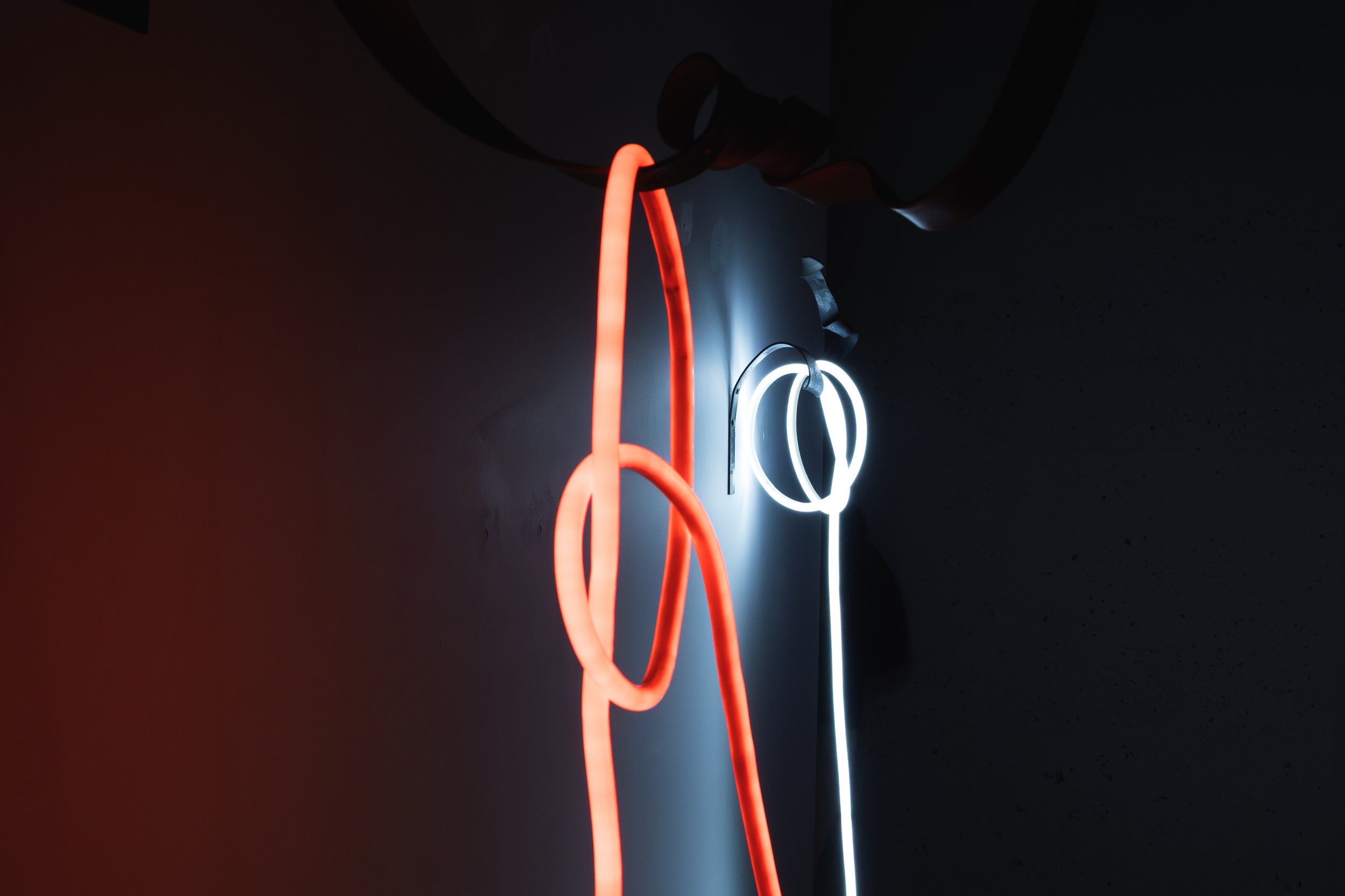
Photon Sensations in Linear Empty Space = Vacuum
Light is one of the fundamental phenomena of the universe. It is compelling from every direction, and its meaning is nearly infinite, often associated with hope, awareness, and positive contexts. Light always travels; it finds its way, whether we perceive it or not. In a similar way, our emotions move as well. They are not always visible, not always controllable, yet they are real and influential. Highly abstract.
The light in the works of this exhibition is placed in dialogue with emotion, intuition, and perception. An attempt to make the invisible tangible: the energy, the vibration, the state between us. In quantum physics, light is both a wave and a particle—a duality that challenges conventional understandings of reality. In the same way, emotion is both subjective and material; it shapes behavior, decisions, and the space between us.
The works reflect the idea that everything is interconnected and that our perception is an active participant in what comes into being. Reference is made here to Karen Barad’s concept of Agential Realism, in which the world is not a collection of separate objects but a process, relationships, and interaction. Reality emerges in the act itself.
The sculptures are made of metal and 360° neon LED light tubes. They form abstract, linear drawings in space—something like reliefs, wall pieces, and wall-mounted sculptures. Here, light does not merely draw form but a state, within an abstract emotional context.
Gratitude to the light.
Gratitude to emotions.
Spatial gratitude.
the energetic gap between me and you
between us and the works = artworks
negative charge – circumstances prevail
positive charge – circumstances prevail
quantum discharge + my responsibility
the substance I inject into you
the substance both conducts and insulates
at the speed of light…
Katrín Inga Jónsdóttir Hjördísardóttir
Devaluation of Emotions
Emotions are cold — rationalism is hot. Sentimentality, empathy, gentleness, and honesty are out — irony, facts, status reports, statistics, and Excel are in. Cells are in. Commas are in. Home and shelter. Friendship and love. Truth, peace, and desire. All out. A glint in the eye is out. Tone of voice is cold — monotony is hot. Facial expressions are cold. Numbness is hot.
One of Pierre Bourdieu’s fundamental theories concerns the devaluation of culture in relation to its popularity. What appeals to the masses is cheap, while what the bourgeoisie favor is expensive. The more exclusive, the higher the value. Over the past fifteen years, society has undergone a revolution of revelation. Violence was pulled out of silence, sexual freedom became mainstream, and gentleness, care, and tolerance became self-evident in human interaction. It was considered better to learn about others, to place oneself in their position, rather than to reject their realities and lived experiences. Now there is a backlash against this development, wielding the only weapons hardness knows how to use.
Driven forward by the wealthy and their aspirants, cold rationalism has arrived to eradicate emotion and humanity. To carve society down with devalued feelings. To reject mainstream compassion.
But emotions are not the opposite of reason. They are electrical impulses and chemical compounds of soul and body. They are the most real thing about being human and what governs every single second we live. To be emotional is to be alive.
In this exhibition, Katrín Inga connects emotions to the accepted form of reality — physics and particles. Cells, commas, and feelings. In doing so, she reveals the reality of emotions and their value. How resilient emotions are within our bodies, and their capacity to survive when everything else is gone. If nothing remains but the atom, there are still atoms of emotion.
If cold rationalism sets out to eliminate empathy and warmth, it eliminates itself at the same time. For disgust is also an emotion, and my belief that the atom of love is greater than the atom of hatred is nothing but belief made of other atoms. A photon of faith at the speed of light.
Snærós Sindradóttir
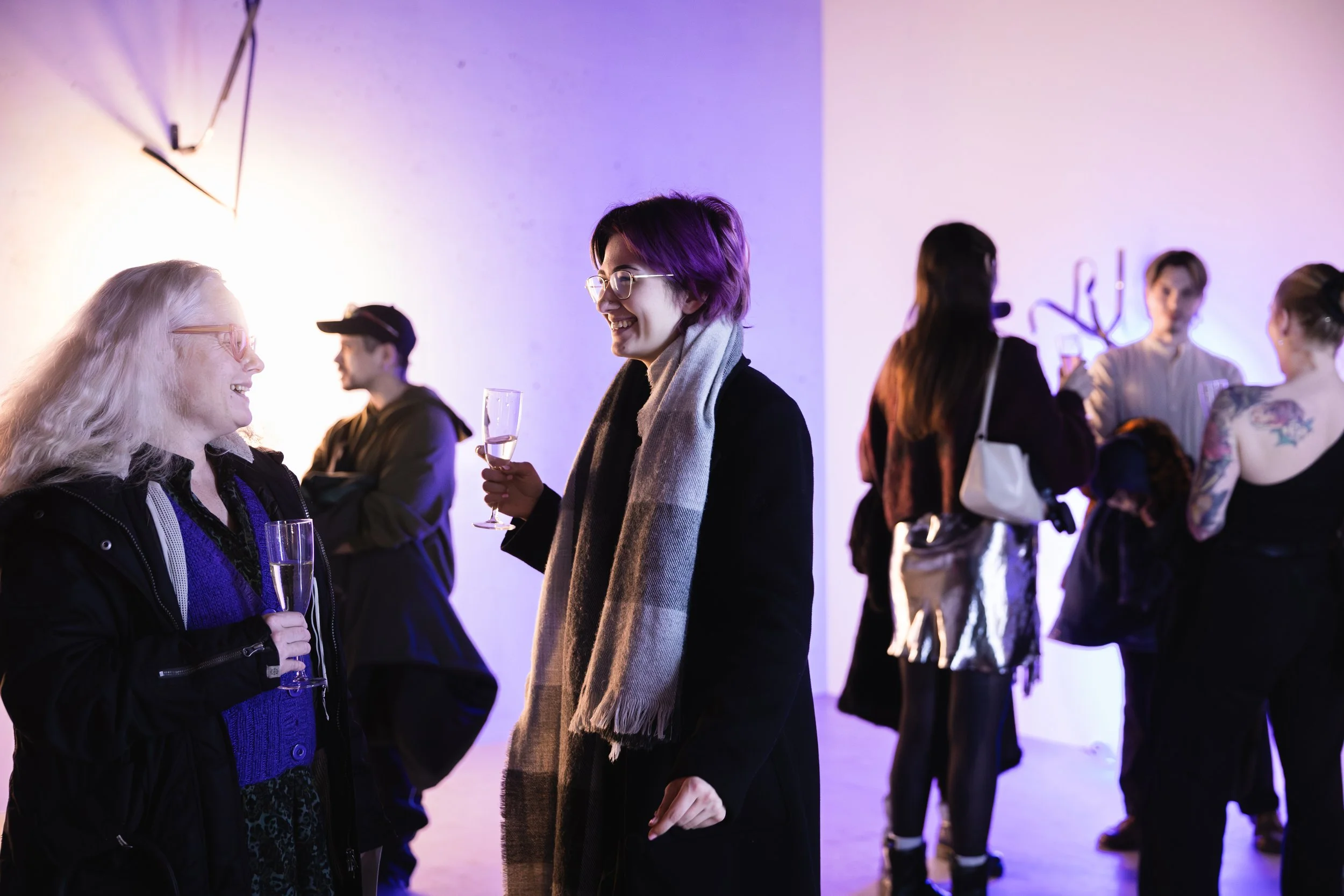
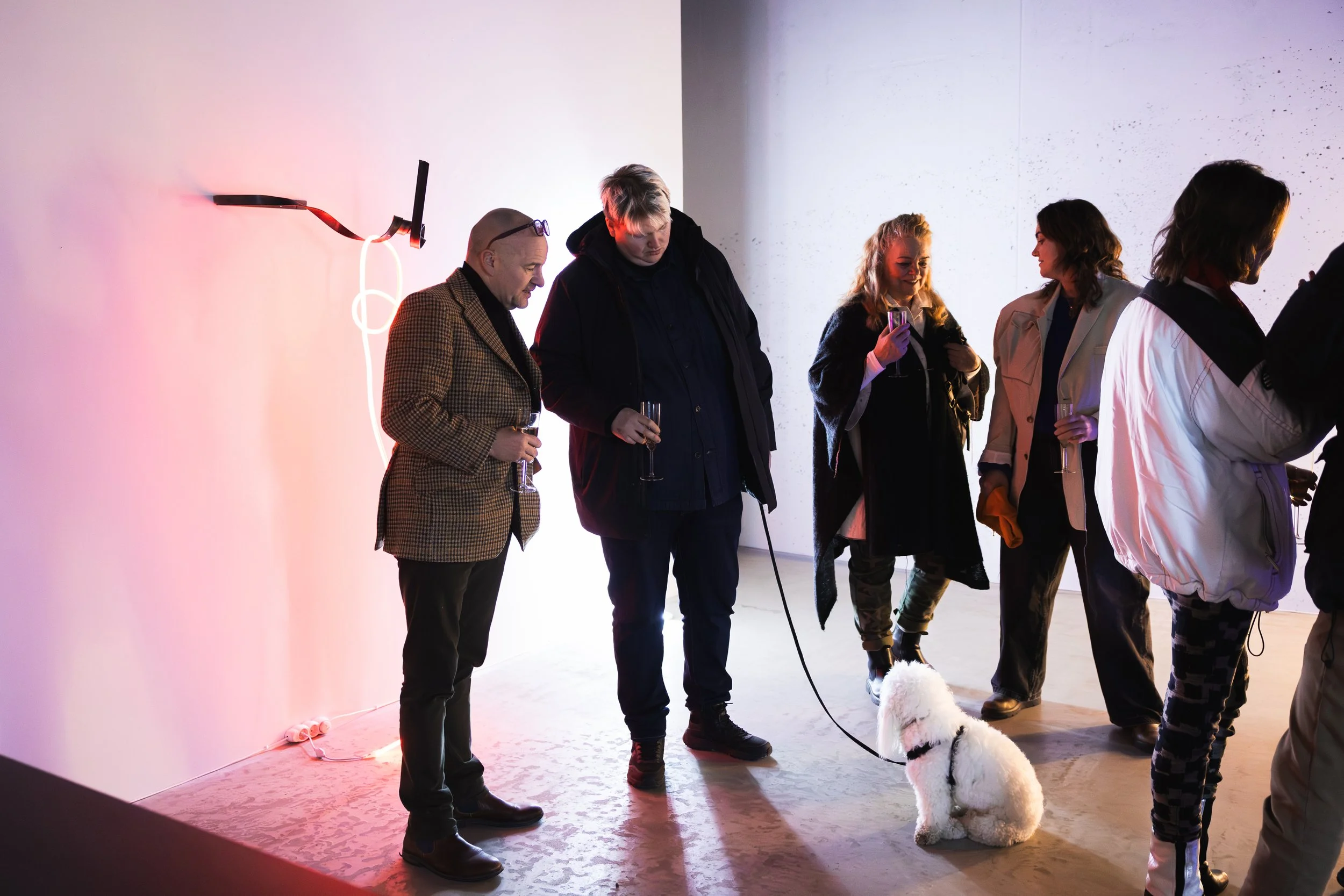
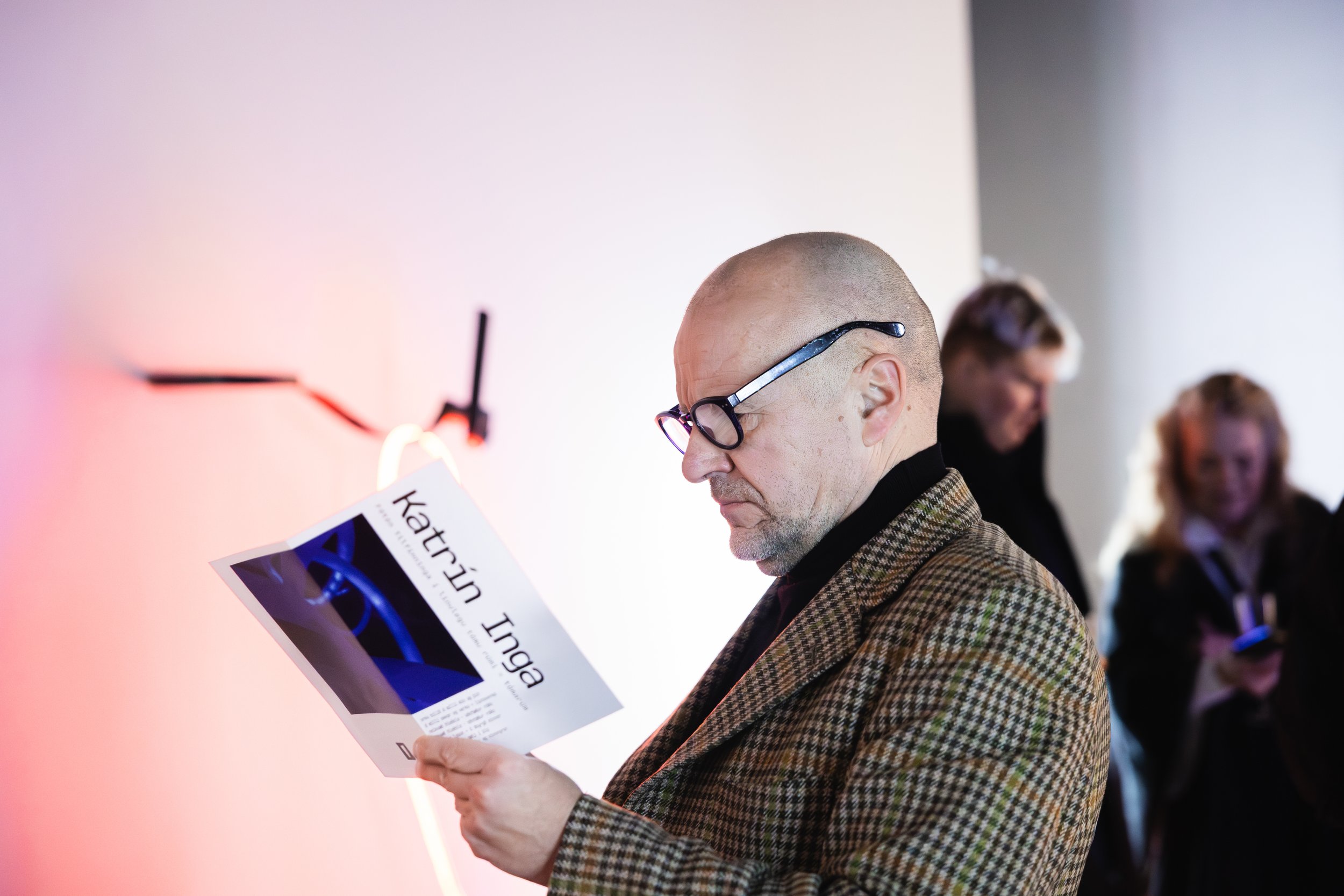
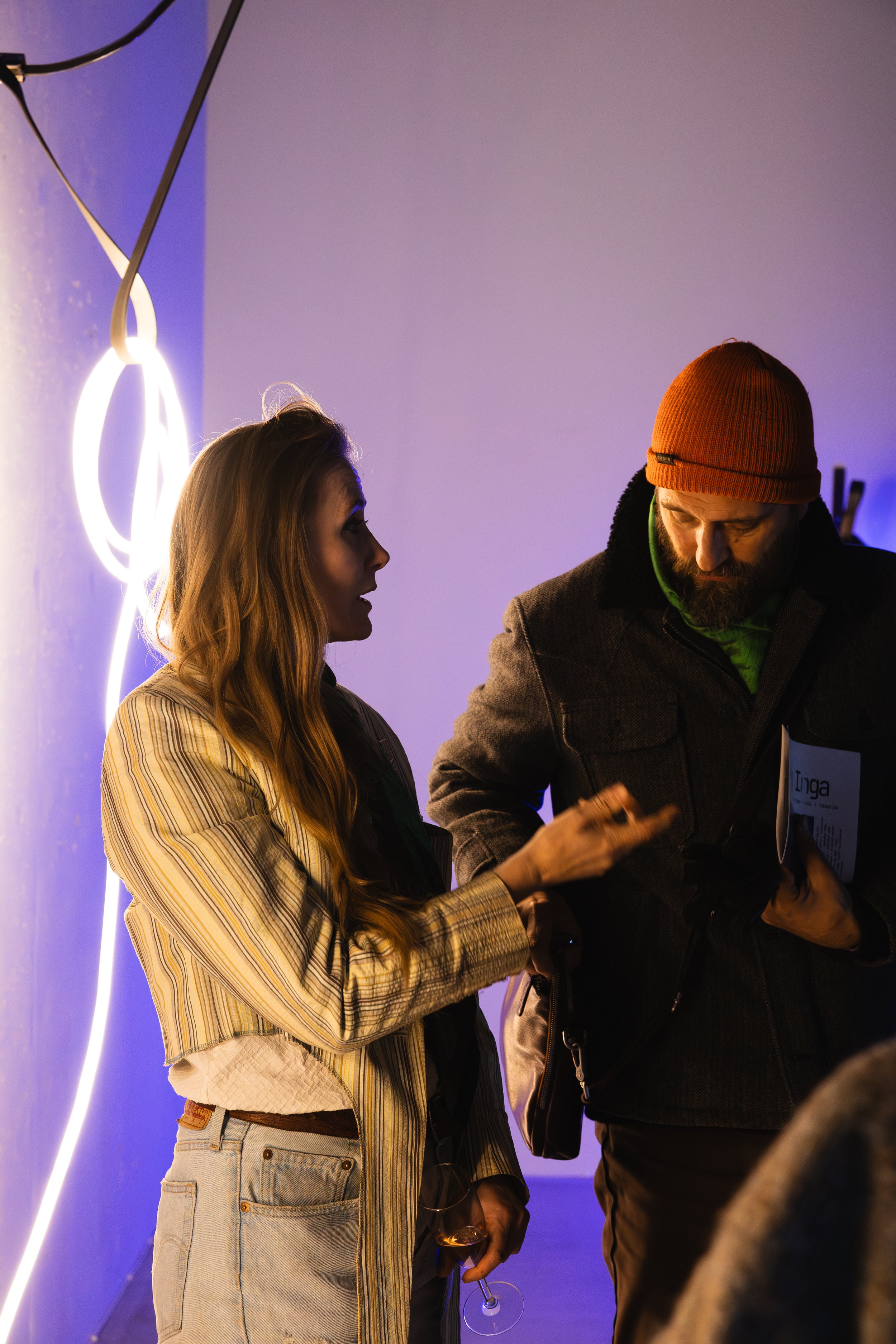
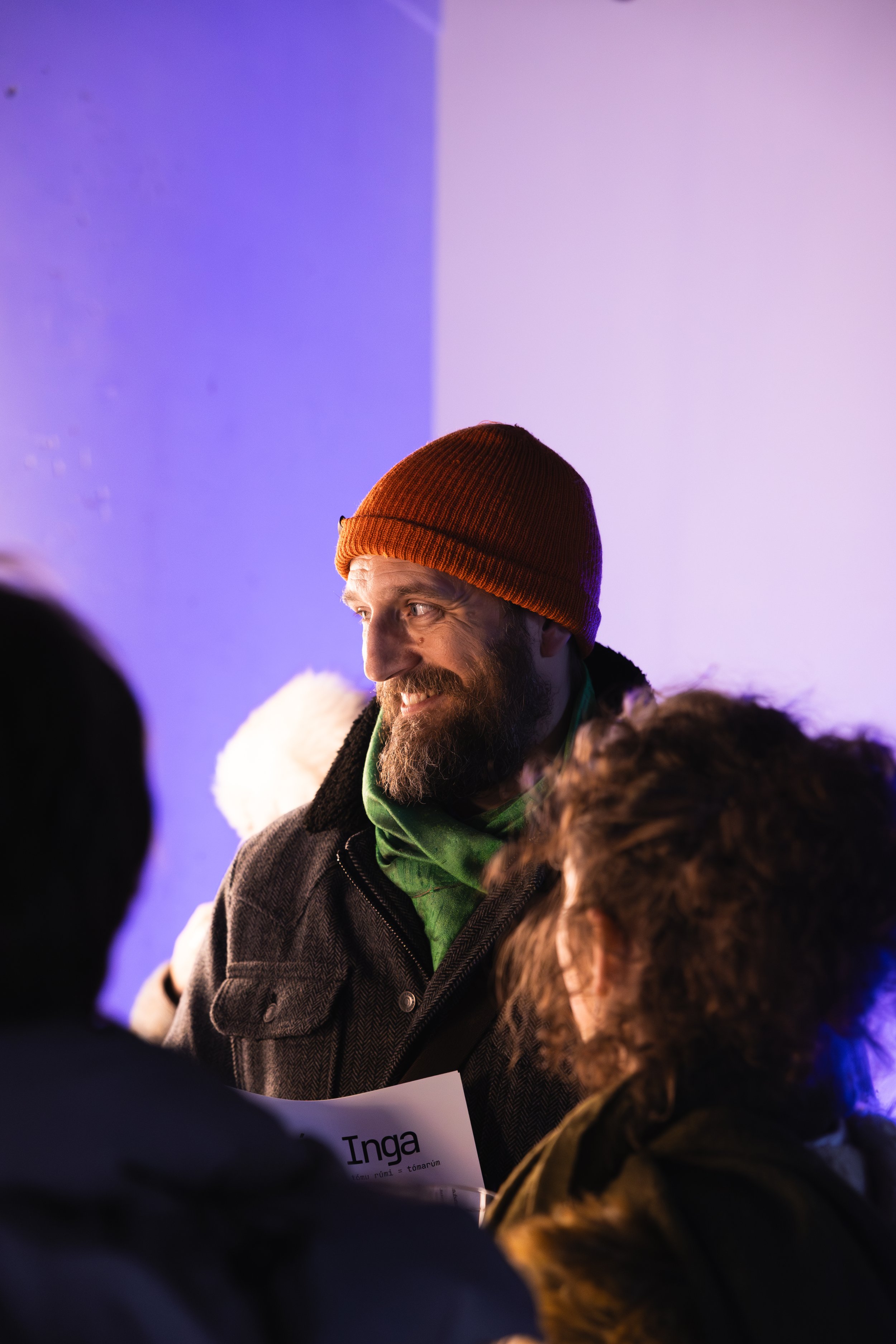
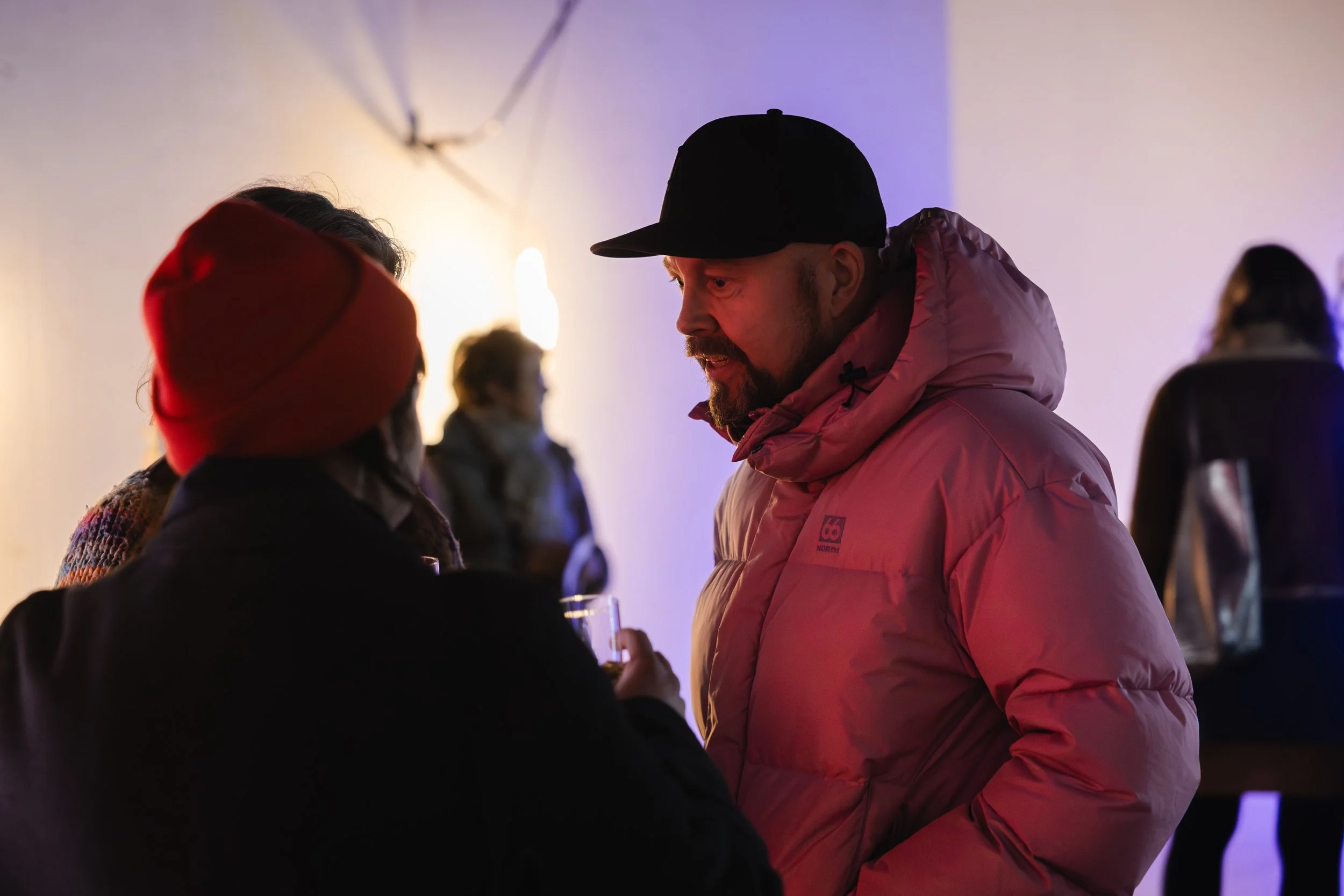
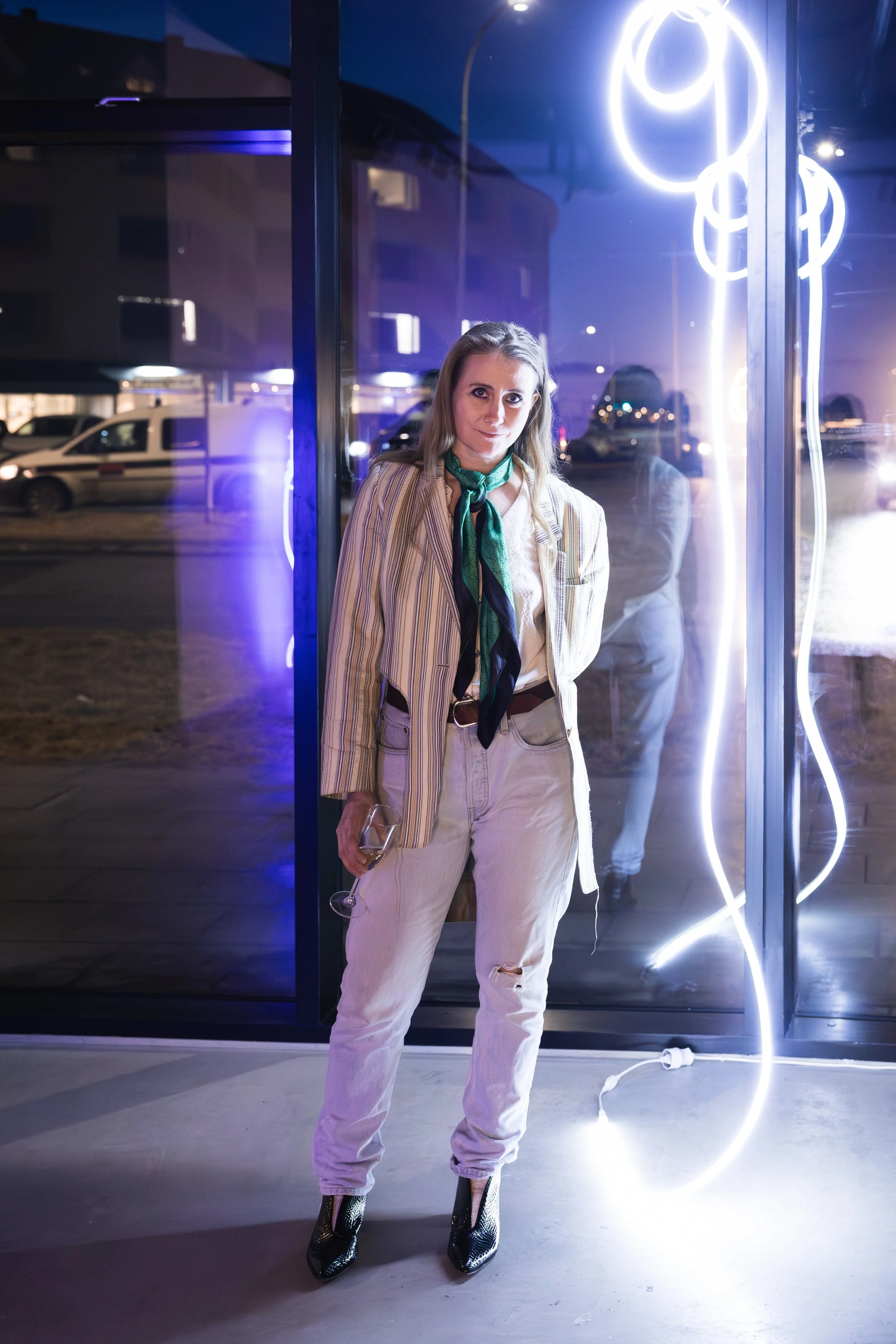
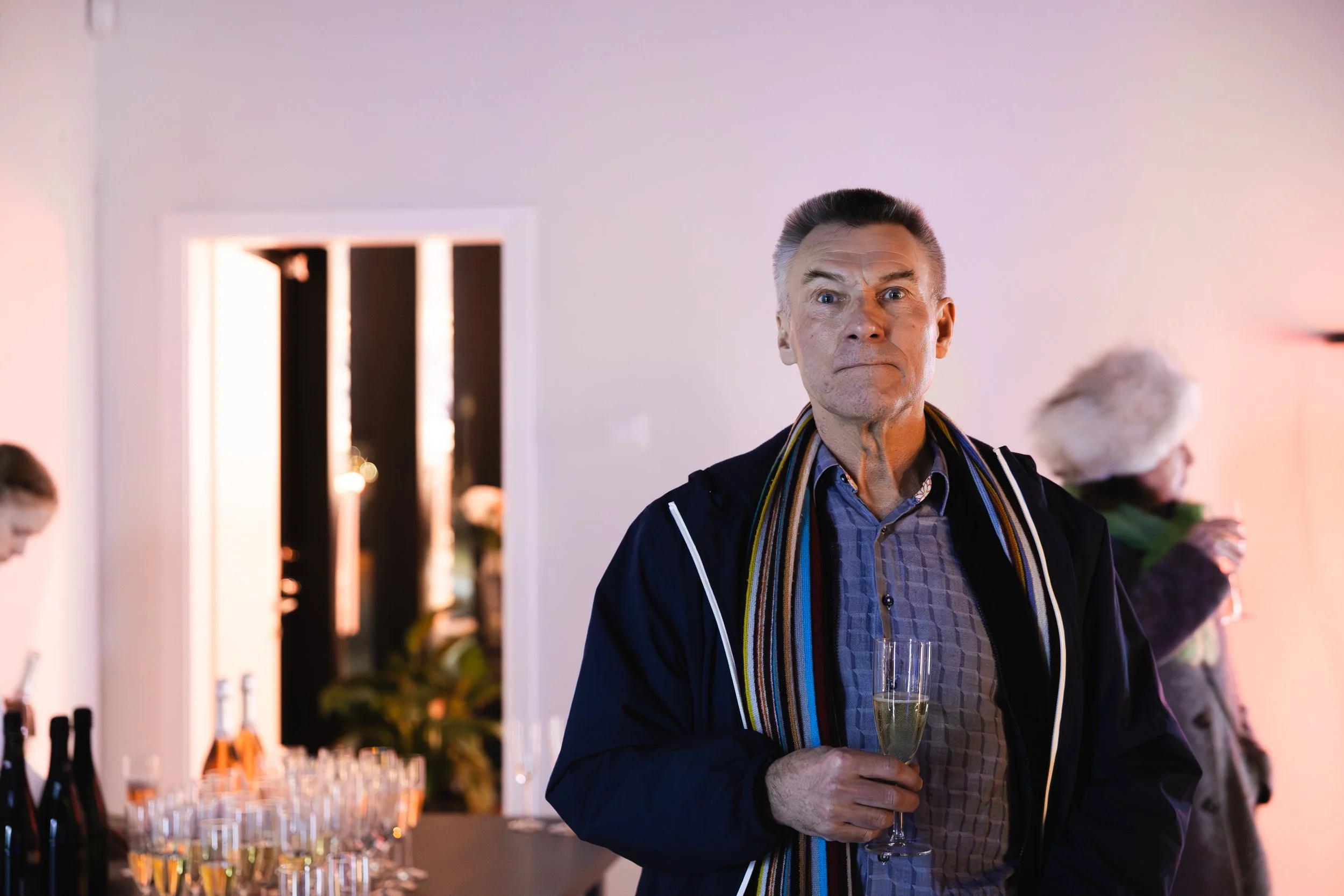
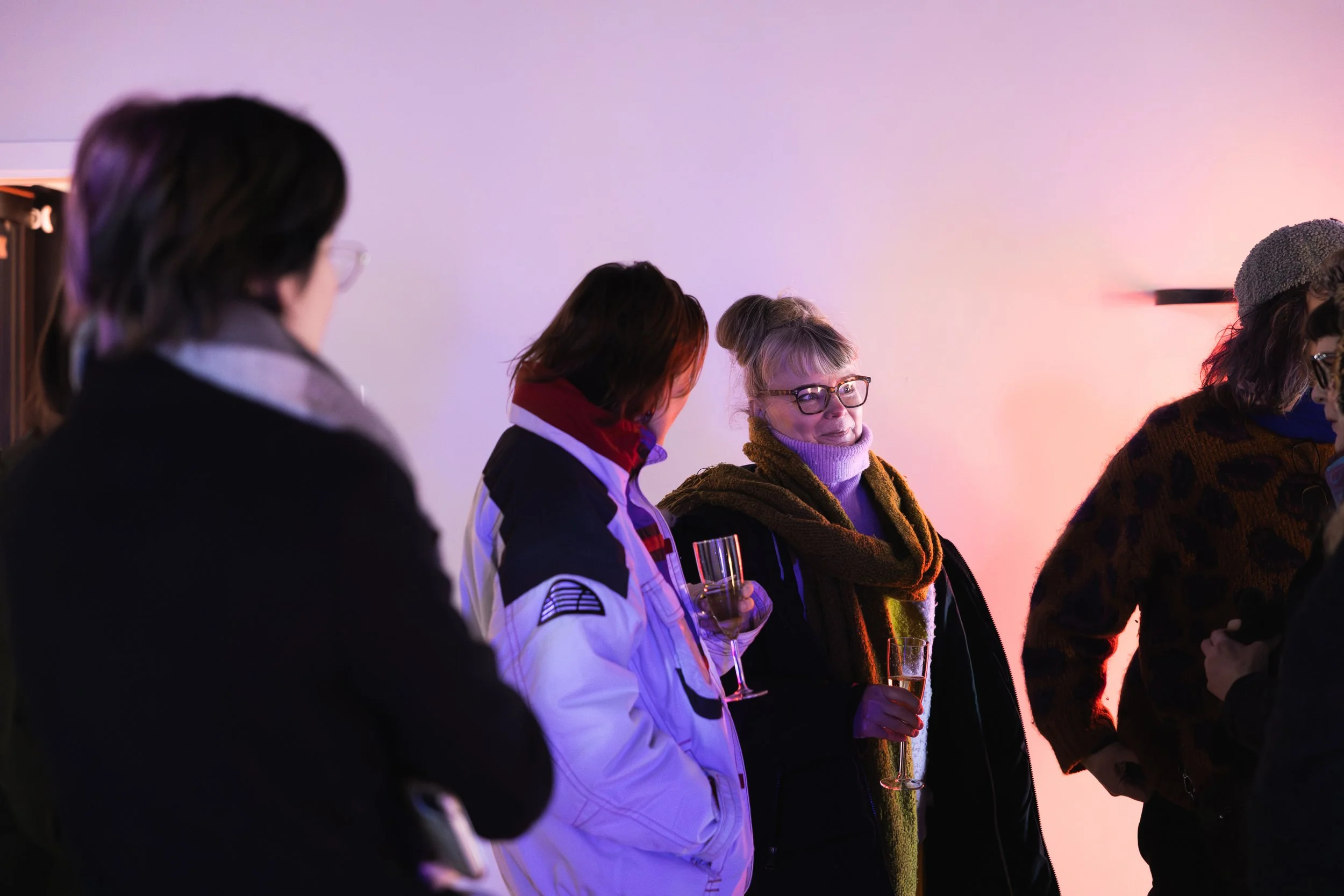
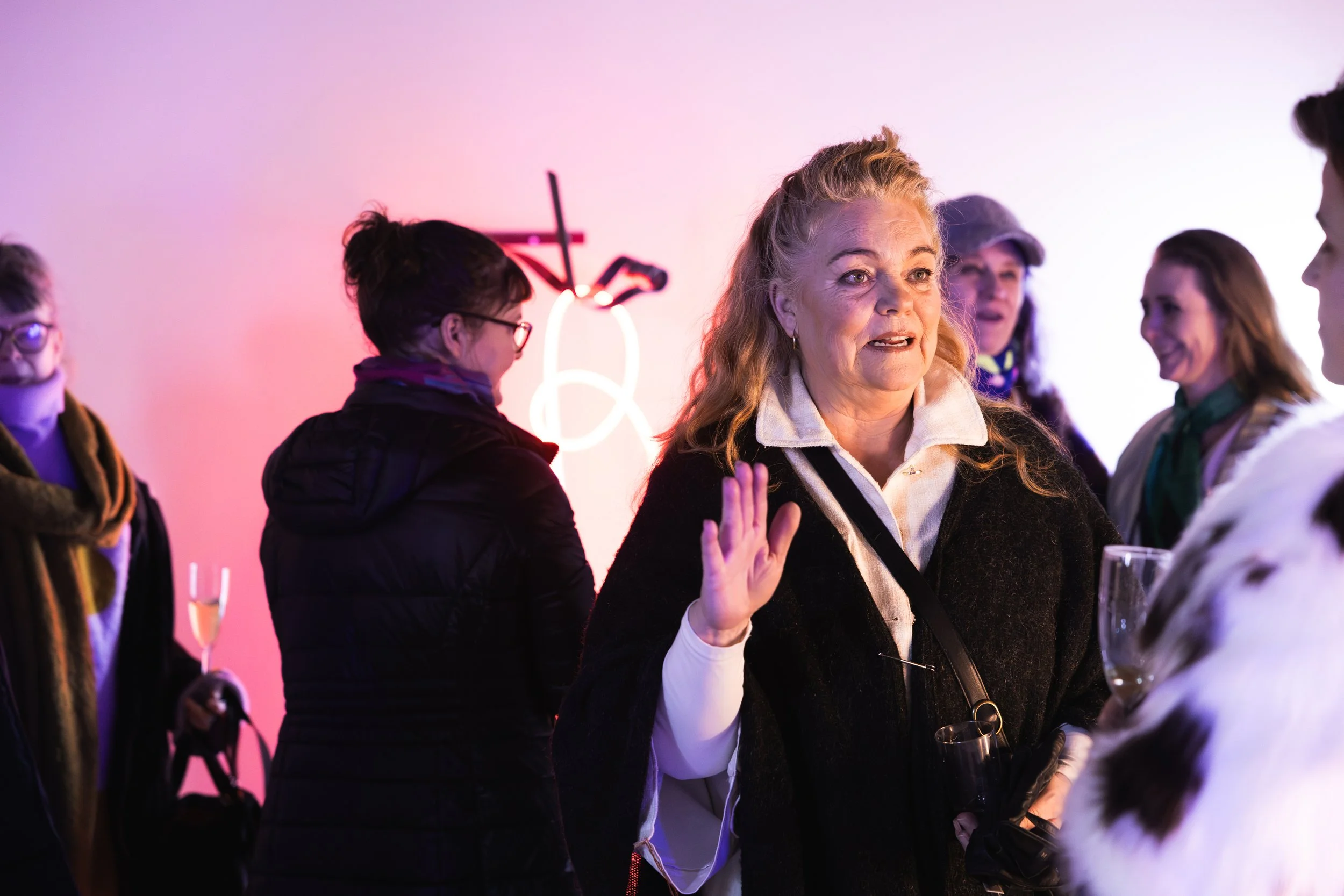
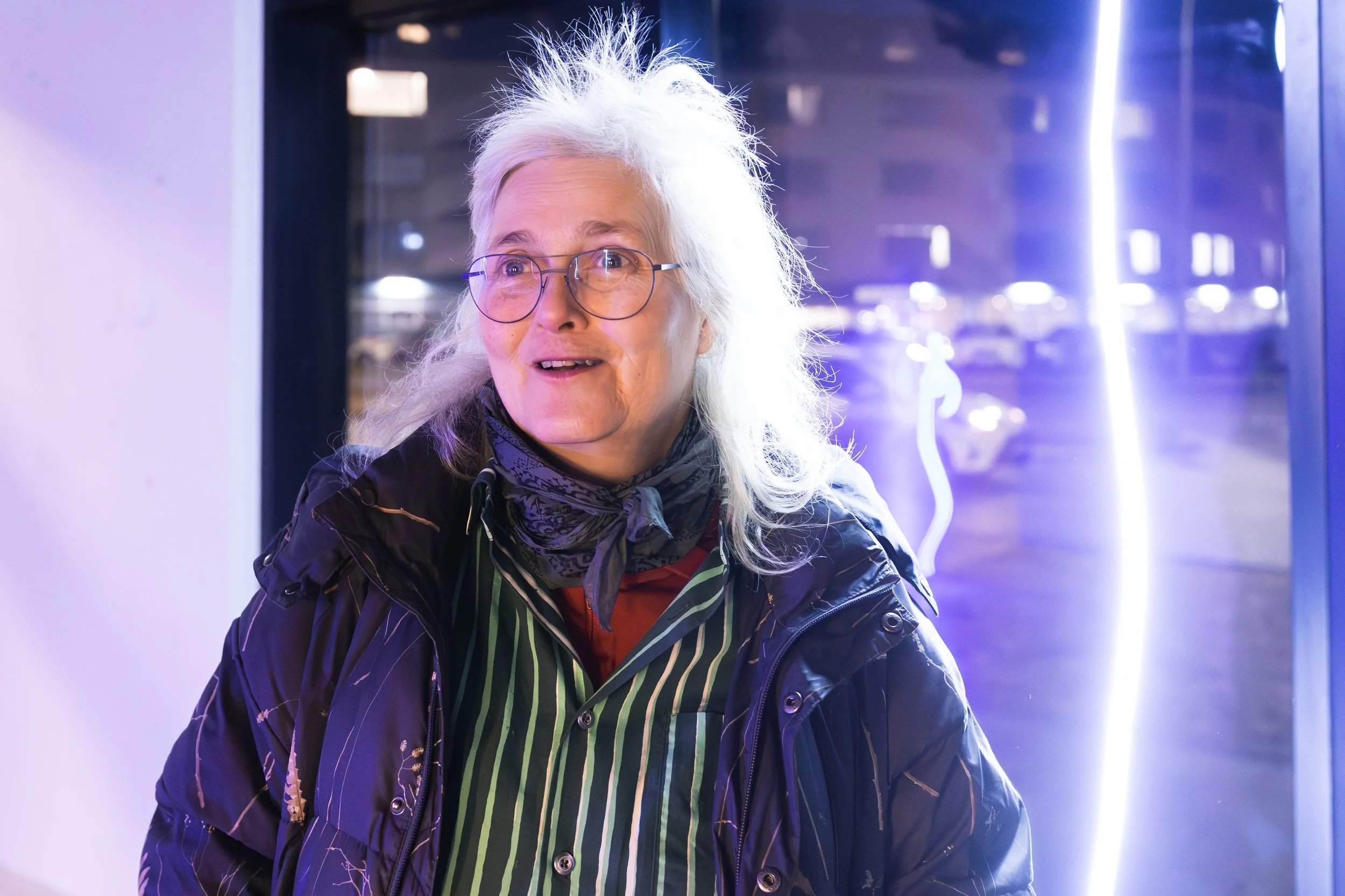
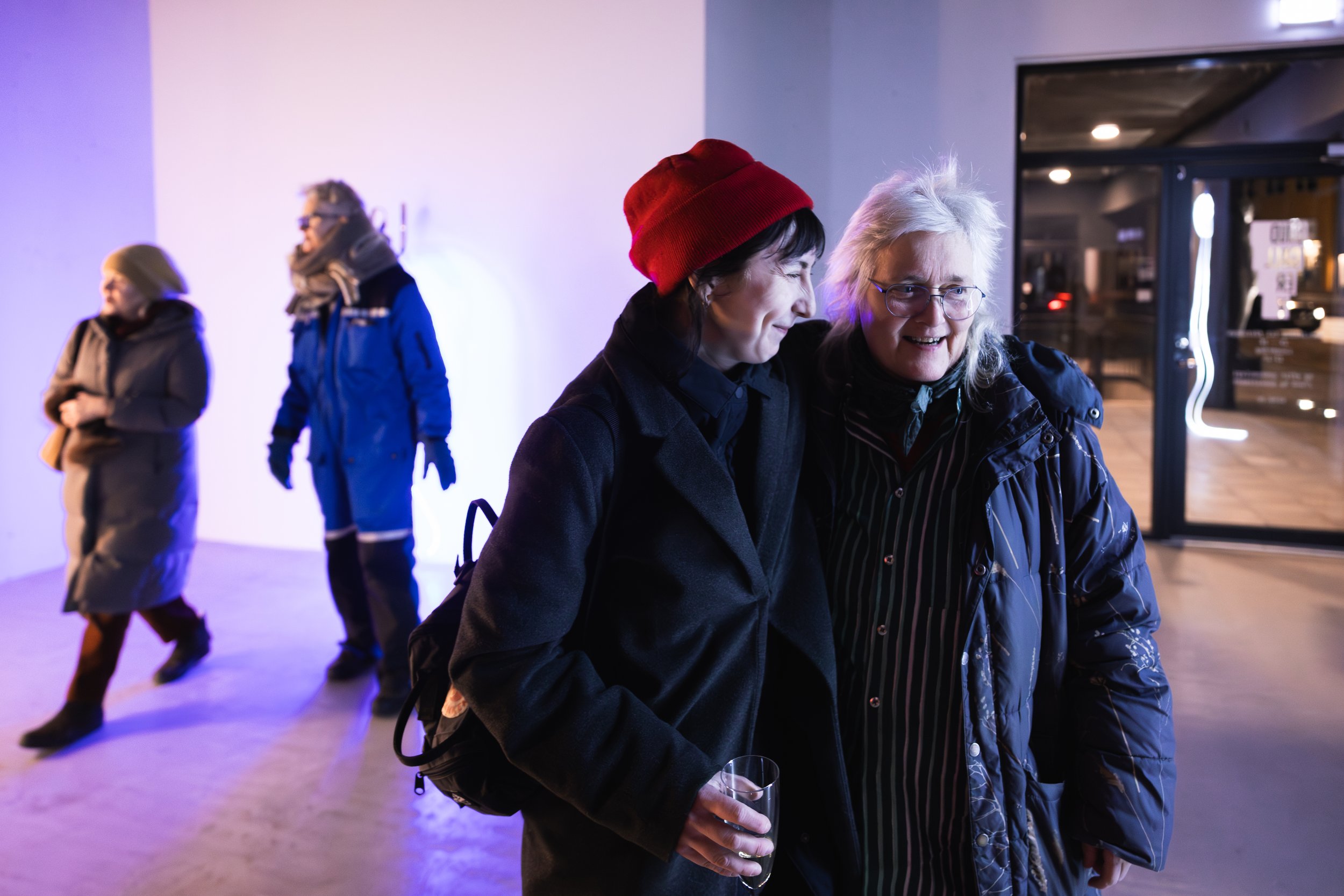
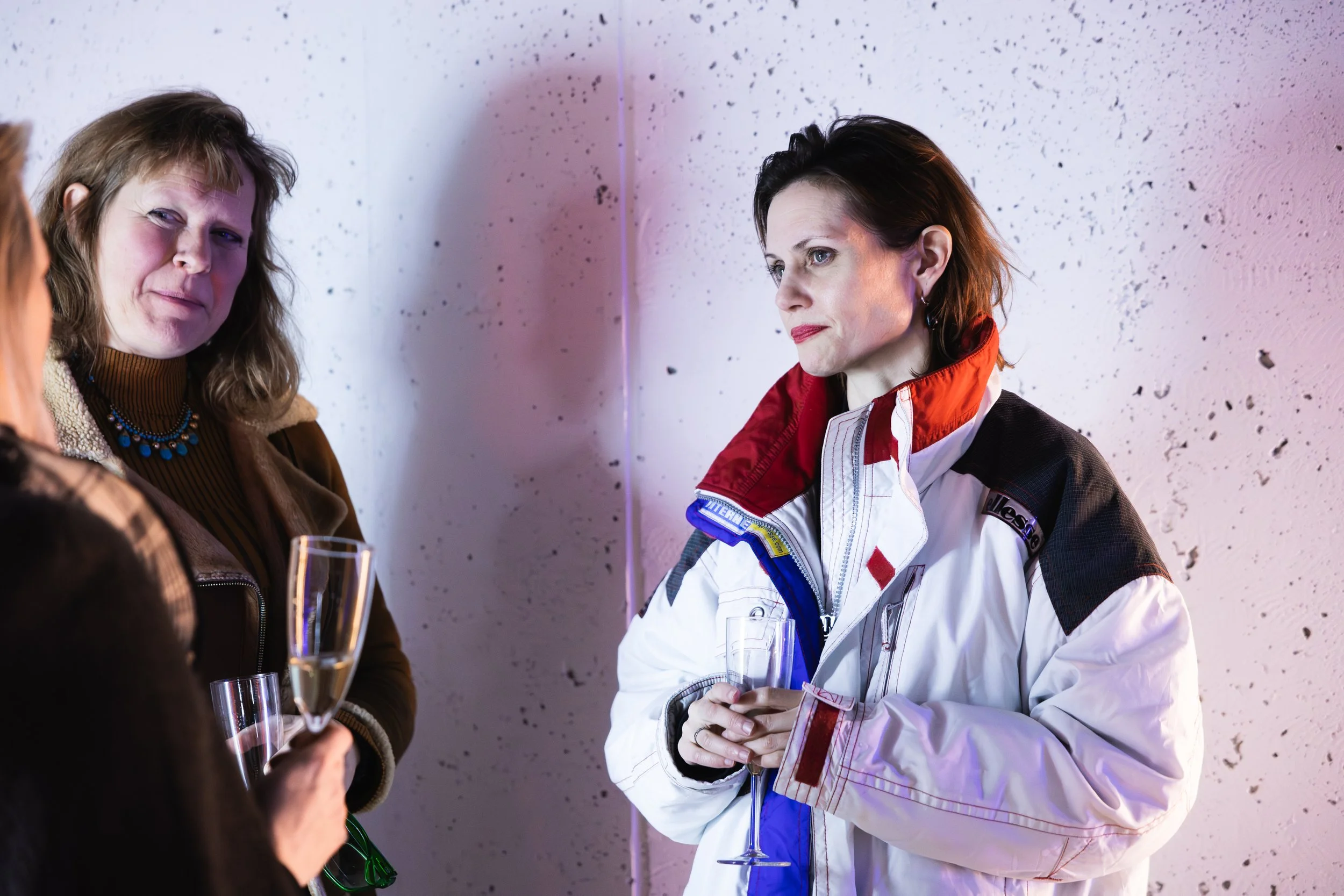
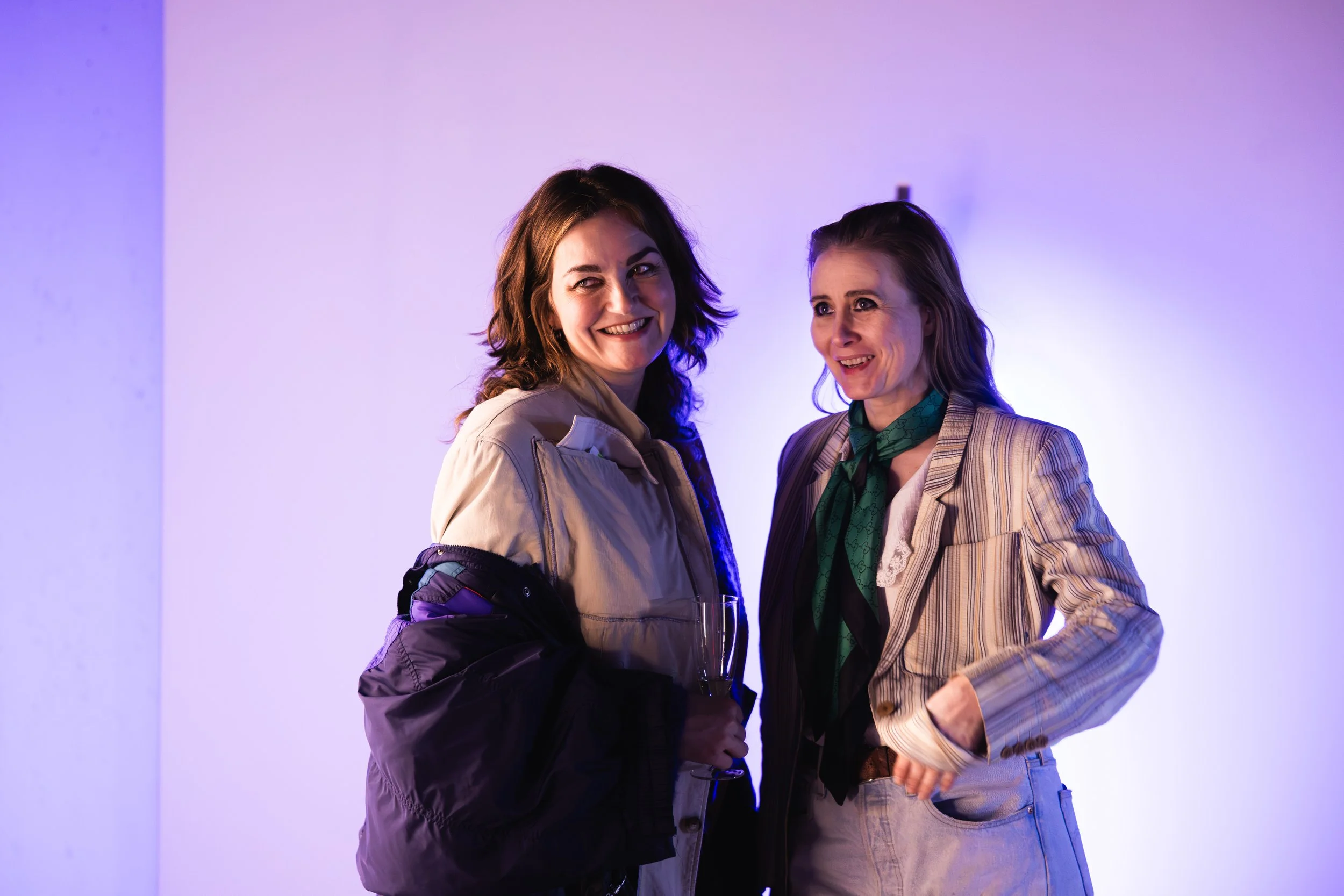
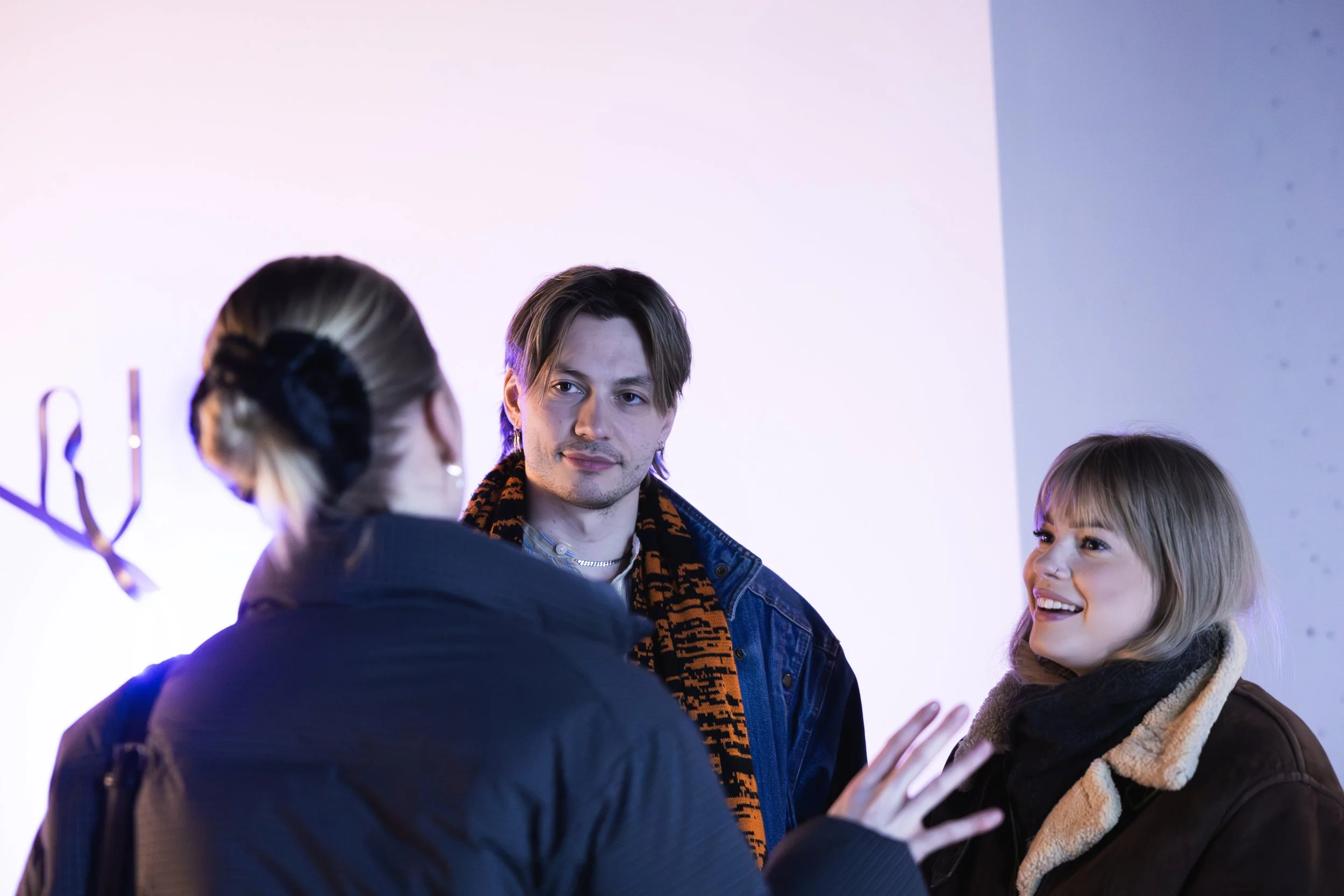
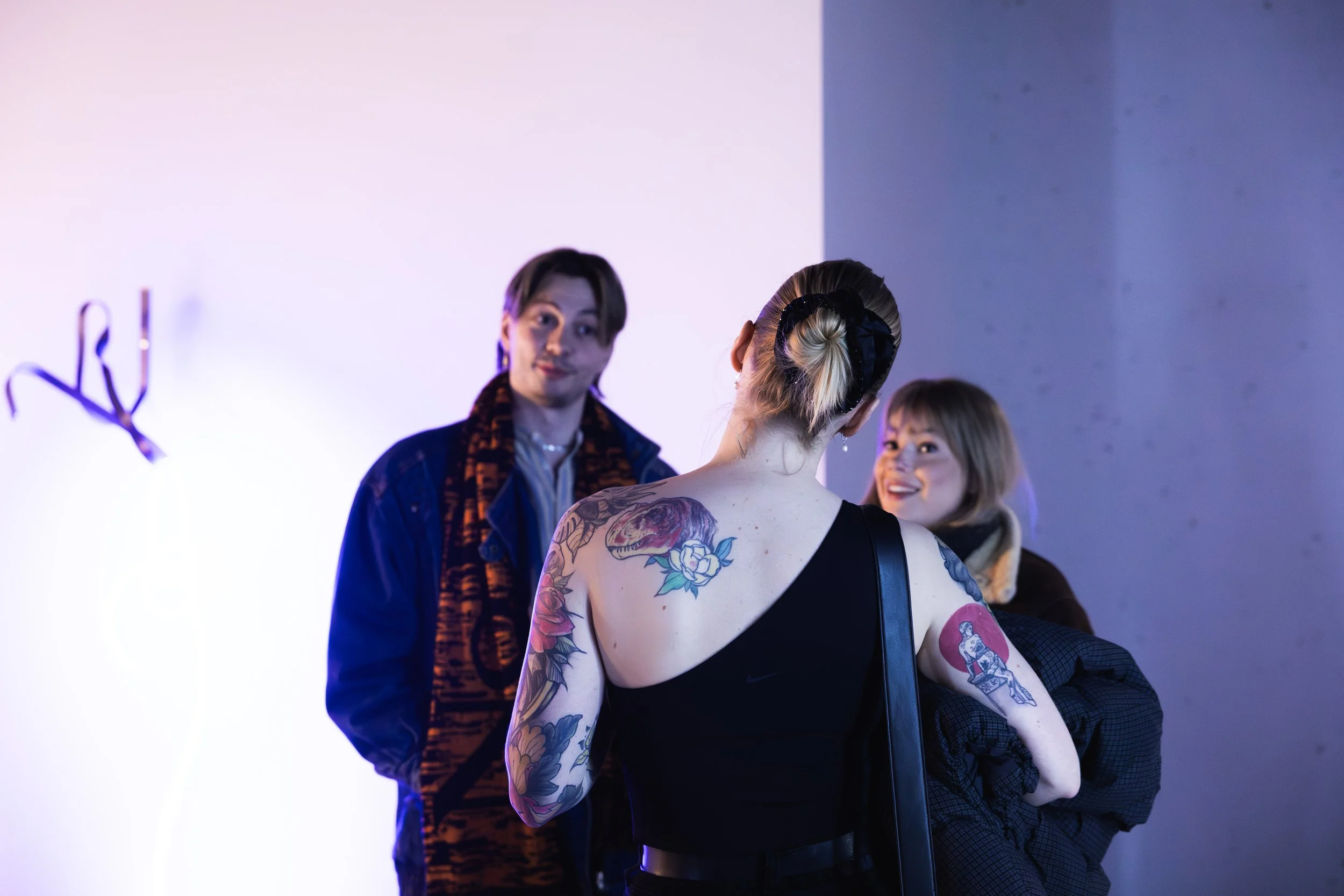
From the opening
Photos by Sunna Ben

In the media: